
If you’re feeling tired, craving sugar, gaining weight around your middle, or just not quite like yourself, your blood sugar could be playing a much bigger role than you realise.
This isn't just about Type 2 Diabetes.
In fact, many of the people I work with haven’t been diagnosed with anything at all. They’ve simply been told things like “keep an eye on it” or “it’s a bit borderline”. However, their symptoms tell a different story. Low energy, poor sleep, brain fog, stubborn weight gain, especially around the middle, these are often early signs that blood sugar isn’t as well regulated as it could be.
What we mean by blood sugar balance
Blood sugar, or glucose, is your body’s main source of energy.
When you eat, particularly carbohydrates, your blood glucose rises. Your body releases insulin to help move that glucose into your cells where it can be used for energy.
When this system is working well, your energy feels steady and your body runs efficiently. When it’s not, things can start to feel a bit off.
Over time, the body can become less responsive to insulin, a process known as Insulin Resistance. This means glucose stays in the bloodstream for longer, which can affect energy levels, fat storage and overall health.
The signs your blood sugar might be out of balance
You don’t need a diagnosis to start noticing patterns. Some of the most common signs include:
- Energy dips, especially mid-morning or mid-afternoon
- Strong cravings for sugar or carbohydrates
- Feeling shaky, irritable or “hangry” if you don’t eat
- Weight gain, particularly around the middle
- Brain fog or poor concentration
- Relying on caffeine to get through the day
Many people describe it as a bit of a rollercoaster, peaks of energy followed by dips that leave them reaching for something quick just to keep going.
The blood sugar rollercoaster
When you eat foods that are quickly digested, particularly refined carbohydrates or sugary snacks, your blood glucose rises rapidly.
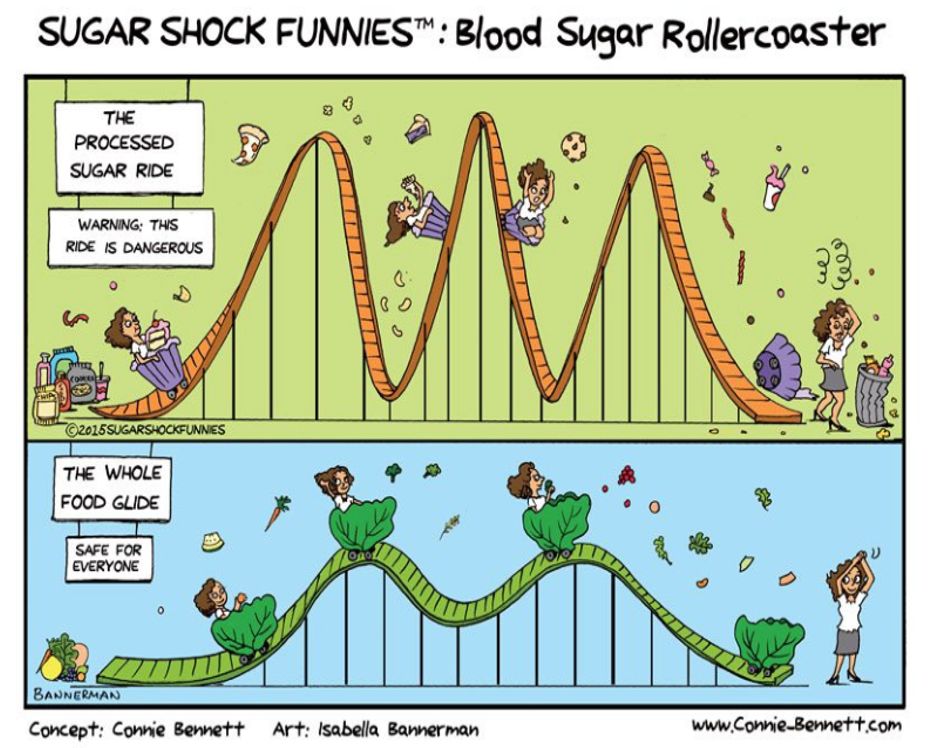
Your body responds by releasing insulin to bring those levels back down. However, this can sometimes overshoot, leading to a drop in blood sugar that leaves you feeling tired, hungry and craving more sugar.
This cycle can repeat throughout the day, impacting not just your energy, but also your mood, appetite and long-term metabolic health.
The most common mistakes I see
This is where it gets really practical. Most of the issues I see aren’t about extreme diets, they’re about everyday patterns.
Skipping meals - This often leads to grazing later in the day, which keeps blood sugar and insulin elevated for longer.
Low protein breakfast - A quick breakfast like cereal or toast may be convenient, but it’s unlikely to support steady energy.
Too much caffeine - Using coffee as a substitute for food can mask fatigue short term, but often worsens energy dips later on.
Constant snacking - Eating little and often might sound helpful, but it can prevent your body from properly regulating blood sugar.
What actually helps (and keeps things simple)
The good news is that small, consistent changes can make a real difference
Build your meals around balance
Think:
- Protein
- Fibre
- Colour (a variety of plant foods)
- Healthy fats
This combination helps slow the release of glucose into the bloodstream and supports more stable energy.
Aim for three proper meals a day - Allowing a few hours between meals gives your body time to process what you’ve eaten and helps regulate both digestion and blood sugar.
Start your day with protein - Adding protein at breakfast can help reduce cravings and support better energy throughout the day.
Move after meals - Even a short walk after eating can help your muscles use glucose more effectively.
Prioritise sleep and manage stress - Sleep and stress both have a direct impact on blood sugar. Poor sleep and high stress levels can make regulation much harder.
A note on midlife and hormonal changes
Although this is relevant to everyone, it becomes particularly important in midlife, especially for women. During perimenopause and beyond, changes in hormones, particularly oestrogen, can reduce how sensitive the body is to insulin. This means blood sugar can become harder to manage, even if eating habits haven’t changed. This is often why people find that what “used to work” no longer does.
Understanding this can be really helpful, it’s not about doing anything wrong, it’s about your body changing and needing a slightly different approach.
Targeted nutrients that can support blood sugar
Food always comes first. However, certain nutrients can offer additional support when needed.
- Magnesium supports glucose metabolism
- Chromium plays a role in insulin function
- Berberine has been shown in research to support blood glucose control
- Alpha-lipoic acid may support insulin sensitivity
These can be useful alongside a balanced diet and lifestyle, particularly if you’re struggling to get things back on track.
Where to start if you’re feeling stuck
If this is sounding familiar, the biggest challenge is often knowing where to begin. That’s exactly why I created my self-paced 28-Day Transformation Programme.
It gives you a clear, structured way to:
- reset your eating habits
- reduce sugar and ultra-processed foods
- increase protein, fibre and plant diversity
- and understand how your body responds to food
It’s about building a solid foundation that supports your energy, metabolism and long-term health. You can find out more here: https://hillstart.me.uk/transformation
Want to go deeper?
If you’d like to hear more on this topic, including practical examples and real-life insights, you can listen to the full podcast episode:
Or search 'Fab Female Nutrition' on your favourite podcast provider
Final thought
If your energy feels all over the place, your body is usually trying to tell you something. And more often than not, blood sugar is a really good place to start.
Small, consistent changes can make a bigger difference than you might expect, and once your energy starts to stabilise, everything else often becomes that little bit easier too.